

-
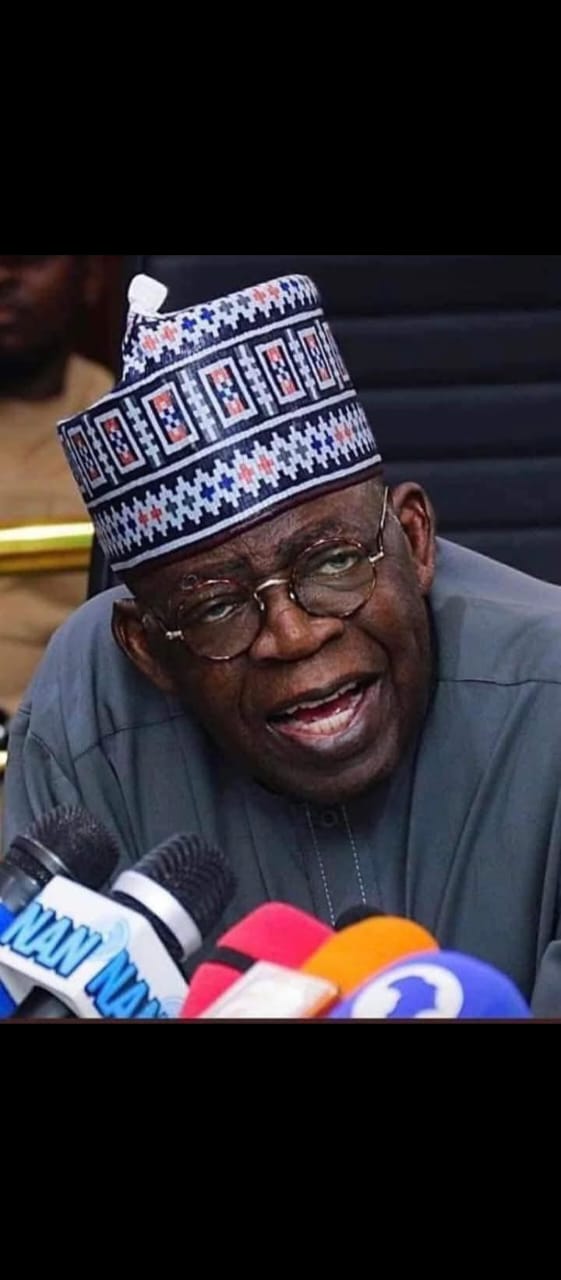
Former National Human Rights Commission chairman Chidi Odinkalu has raised a constitutional alarm over President Bola Tinubu’s prolonged stay abroad, arguing that Nigeria cannot be governed indefinitely from Europe through remote directives and official representations.
-
Odinkalu says the simultaneous absence of Tinubu and Vice President Kashim Shettima is an unprecedented departure from the convention followed by previous administrations, when one of the two principal executive officers remained in Nigeria to ensure continuity of government.
-
The constitutional lawyer says Section 145 of the 1999 Constitution cannot be bypassed by describing the President’s extended stay as a “working vacation”.
-
The Presidency insists Tinubu has remained in touch with officials and continued directing government affairs from abroad, while Shettima is representing Nigeria at the 81st United Nations General Assembly in New York.
The former Chairman of the National Human Rights Commission (NHRC), Professor Chidi Odinkalu, has raised a constitutional red flag over President Bola Tinubu’s prolonged absence from Nigeria, warning that the country cannot be run indefinitely from abroad.
Odinkalu, a lawyer and professor, made the comments as controversy continued to surround Tinubu’s extended stay in Europe and the simultaneous absence of Vice President Kashim Shettima, who is currently in New York representing Nigeria at the 81st United Nations General Assembly.
Speaking on Channels Television’s Politics Today on Wednesday, Odinkalu accused the administration of creating a pattern in which Nigeria’s two principal executive officers are simultaneously outside the country.
He argued that the situation was not merely about the President taking an extended vacation but raised fundamental questions about constitutional governance, continuity of executive authority and the obligations attached to the offices of President and Vice President.
“Running a country requires common sense. And this is the first time, this is the first administration where the principals, the Vice President and the President, are making a habit of abandoning the country without leadership”, Odinkalu said.
The former NHRC chairman was particularly critical of what he described as a departure from a longstanding convention under previous administrations.
According to Odinkalu, previous presidents avoided situations in which both the President and Vice President were outside Nigeria at the same time.
He cited the administrations of former Presidents Olusegun Obasanjo, Umaru Musa Yar’Adua and Goodluck Jonathan, as well as that of Muhammadu Buhari, arguing that the practice had been for the Vice President to remain in Nigeria when the President travelled abroad.
“Under (Muhammadu) Buhari, whenever Buhari was going out of the country, (Yemi) Osinbajo was required to be back in the country. Under (former President Olusegun) Obasanjo, Obasanjo would never contemplate it. (Former President Umar Musa) Yar’Adua did not contemplate it. (Former President Goodluck) Jonathan did not allow it”, he stated.
READ ALSO:
Odinkalu described the practice as a convention of government that ensured there was an identifiable senior executive authority physically available in Nigeria.
“As a rule, as a convention, pretty much a binding convention of government, no president allowed himself to be out of the country with the vice president at the same time. It never happened. It was not permitted”, he added.
He said the controversy should, therefore, not be reduced to what he described as a “mechanistic reading” of constitutional provisions.
“The question therefore you’ve got to pose is do the current people running the country even think or understand what the obligations of running the country are before we get into the constitutional text?” he asked.
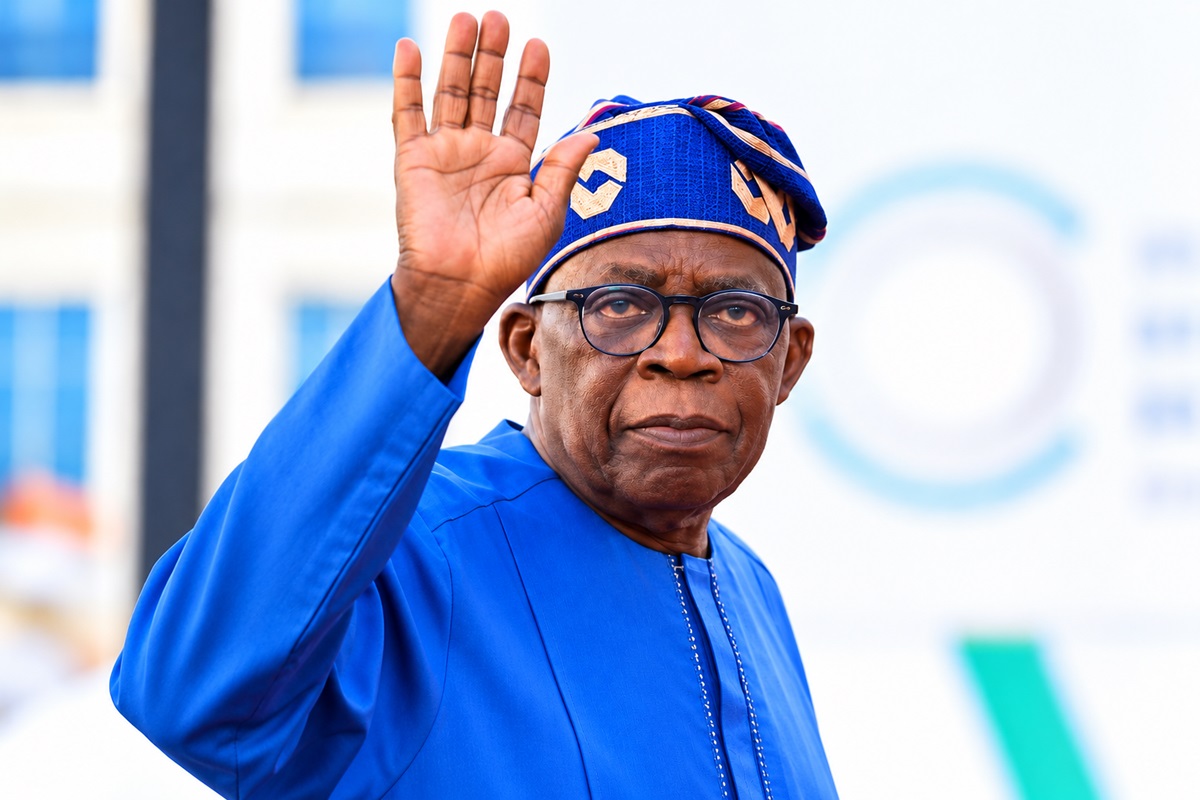
‘Tinubu Cannot Run Nigeria Like Biya Runs Cameroon’, Section 145 Becomes Flashpoint
Odinkalu drew his strongest comparison with Cameroon, saying Nigeria should not be governed in a manner that allows its President to remain outside the country indefinitely.
“Tinubu cannot interminably run Nigeria like Paul Biya runs Cameroon”, he said.
Odinkalu described Tinubu’s prolonged absence as “japa”, a Nigerian expression commonly used to describe leaving the country in search of better opportunities.
The former NHRC chairman also described Nigeria, in the circumstances created by the simultaneous absence of Tinubu and Shettima, as an “ungoverned territory”. He argued that the ability of a President to communicate with government officials from abroad does not, by itself, settle questions surrounding the constitutional exercise of presidential authority.
Odinkalu further rejected the possibility of the Secretary to the Government of the Federation, George Akume, assuming presidential functions simply because both Tinubu and Shettima are abroad. He said such an arrangement does not exist under Section 145 of the Constitution.
The constitutional dispute centres on Section 145 of the 1999 Constitution, which specifically addresses presidential absence.
The provision requires a President proceeding on vacation or otherwise unable to discharge the functions of office to transmit a written declaration to the President of the Senate and Speaker of the House of Representatives.
Upon such a declaration, the Vice President performs the functions of President as Acting President until the President communicates that he is available to resume his duties.
Section 145(2) further provides that where the President fails or is unable to transmit the declaration within 21 days, the National Assembly is empowered to mandate the Vice President to perform the functions of President as Acting President through a simple-majority resolution of each chamber.
The provision has become the centre of the current controversy because Tinubu left Nigeria on August 30 for an initially announced three-week vacation. The Presidency subsequently announced on September 21 that he had extended his stay abroad by a few days and would return at the weekend.
The Presidency has not publicly indicated in the statements reviewed for this report whether Tinubu transmitted the written declaration contemplated under Section 145(1).
That omission has become a major point of contention among critics of the administration.
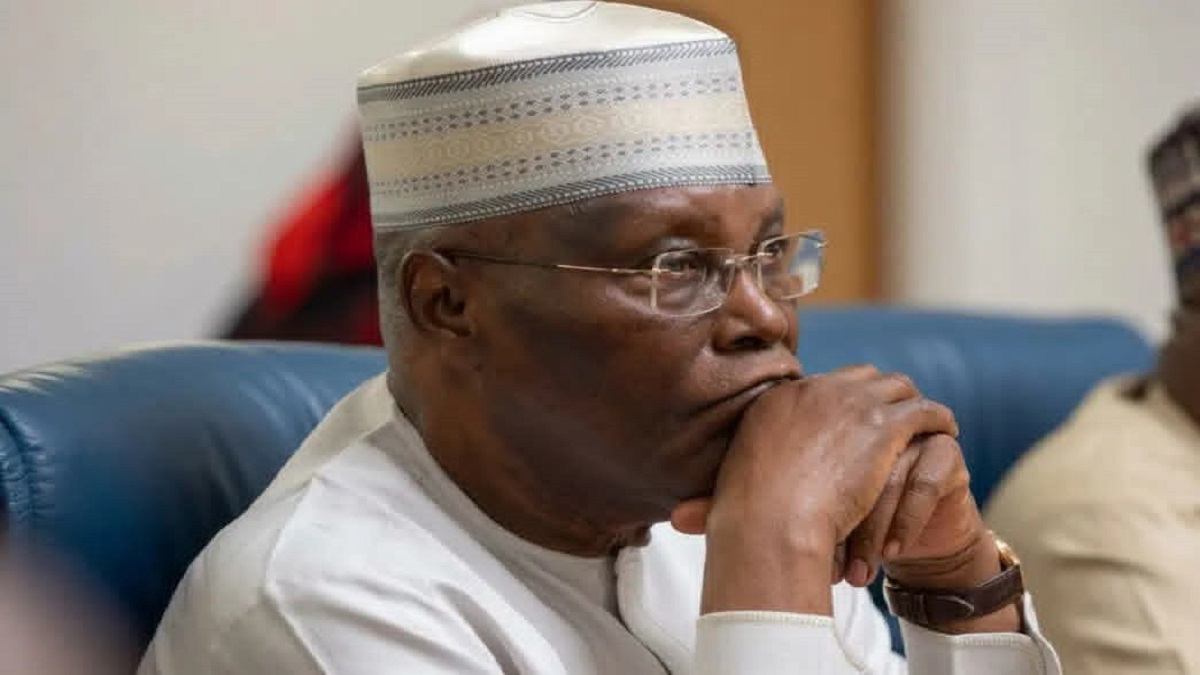
Issues Widened Beyond Atiku – Pressure Mounts On National Assembly
Former Vice President and African Democratic Congress presidential candidate, Atiku Abubakar, was among the first prominent political figures to directly challenge the constitutional implications of Tinubu’s extended absence.
In a statement titled “Who Is In Charge of Nigeria?”, Atiku questioned the continued absence of the President after the initially announced 21-day period.
He argued that the Constitution does not recognise “working vacation” as an alternative system of presidential succession and called for clarification on whether the constitutional procedure had been followed.
Human rights lawyer, Inibehe Effiong, described the simultaneous absence of Tinubu and Shettima as a “brazen violation” of the Constitution, arguing that presidential powers covered by Section 145 are not simply transferable through informal delegation.
The African Democratic Congress has similarly demanded clarification on whether the required declaration was transmitted and why the National Assembly had not acted if it was not.
The controversy has also reached the National Assembly, with some lawmakers calling on the leadership of both chambers to reconvene plenary and establish the constitutional status of the President’s absence.
Members of the House of Representatives operating under the Save Democracy Group, led by lawmakers including Awaji-Inombek Abiante and Abubakar Kusada, have asked Senate President Godswill Akpabio and Speaker Tajudeen Abbas to establish whether Tinubu transmitted the written declaration required by Section 145.
The lawmakers argued that if no declaration was transmitted within the stipulated period, the National Assembly should consider the procedure provided under Section 145(2).
Tinubu’s European Stay
Tinubu left Abuja on August 30 for a three-week vacation as part of his annual leave.
The Presidency said his first destination was London, after which he travelled to Paris, France, where he met French President, Emmanuel Macron, and businessman, Vincent Bolloré, whose media interests include Canal+, Multichoice and Universal Music Group.
The original announcement said the President was expected to return to Nigeria after the working vacation to join political activities ahead of the January 2027 general elections.
However, on September 21, the State House announced that Tinubu had extended the working vacation by a few days.
According to Special Adviser to the President on Information and Strategy, Bayo Onanuga, Tinubu had remained in contact with officials at home and continued directing government affairs.
The Presidency cited the President’s order for an independent investigation into the deaths of 37 suspected illegal miners detained by the Nigeria Security and Civil Defence Corps in Minna, Niger State, as evidence that he remained engaged with national affairs while abroad.
It said the President continued to direct the affairs of government and had delegated the Vice President to represent him at official functions.
Meanwhile, Shettima left Abuja on September 20 for New York to represent Tinubu at the UN General Assembly.
The Federal Government said Shettima would deliver Nigeria’s national statement and participate in high-level meetings and bilateral engagements with world leaders, international organisations and development partners.
The Presidency also said that with Shettima at the UNGA, SGF George Akume would continue representing the President at some official events.
The Core Constitutional Question
At the heart of the controversy, therefore, is not simply whether Tinubu can communicate with Abuja from Paris, London or any other location. The central question is whether the constitutional procedure for presidential absence has been complied with following the expiration of the initially announced 21-day vacation.
As the controversy deepens, the National Assembly faces growing demands to clarify whether it received the declaration required under Section 145(1) and, if not, whether the circumstances warrant action under Section 145(2).
For Odinkalu, however, the issue is larger than the interpretation of one constitutional provision. He argues that constitutional government also depends on conventions, institutional responsibility and an understanding by those in power that governing a country requires more than the ability to issue instructions remotely.
With the President expected back in Nigeria at the weekend, the immediate controversy may subside. But the questions raised over presidential absence, the 21-day constitutional threshold and the simultaneous absence of the President and Vice President are likely to continue to test the boundaries of Nigeria’s constitutional practice.